
Do you need a permit for a porta potty in St. Petersburg?
Most jobs do not. If your portable toilet rental sits on your own lot, a private driveway, or a fenced construction site, you are generally in the clear without a city permit. The trouble starts at the property line. Curb space, sidewalks and any part of the right of way belong to the city, not to you, and placement there needs confirming with St. Petersburg before delivery day. This is the same question people ask about a dumpster on the street or a temporary power pole permit for construction electrical, because all three sit in that gray zone between your lot and the road. When in doubt, call St. Petersburg Porta Pros before you schedule, and we will tell you straight whether your site needs a call to the city. This applies whether you are running a construction dumpster rental alongside your restrooms or just a standard porta potty rental for a renovation crew.
Where can you legally place a porta potty on a job site?
Placement rules exist to keep the unit stable, serviceable and out of the way, not to make your life harder. ADA Standards section 302.1 requires the ground surface under and around an accessible unit to be stable, firm and slip resistant, which rules out loose gravel or soft turf for an ADA accessible porta potty. ADA Standards section 403.5.1 also calls for a 36 inch clear path to the unit, so parking a truck or stacking material in front of the door defeats the purpose. Our porta potty placement guide covers ground conditions in more depth, but the short version: keep it level, keep the path clear, and keep the pump truck's access in mind. A service truck needs real room to maneuver, similar to how a roll-off dumpster rental needs about 60 feet of straight clearance behind the truck for delivery and swap-out. Crowded jobsites in St. Petersburg lose time when nobody thought about truck access up front.
What OSHA rules apply even without a city permit?
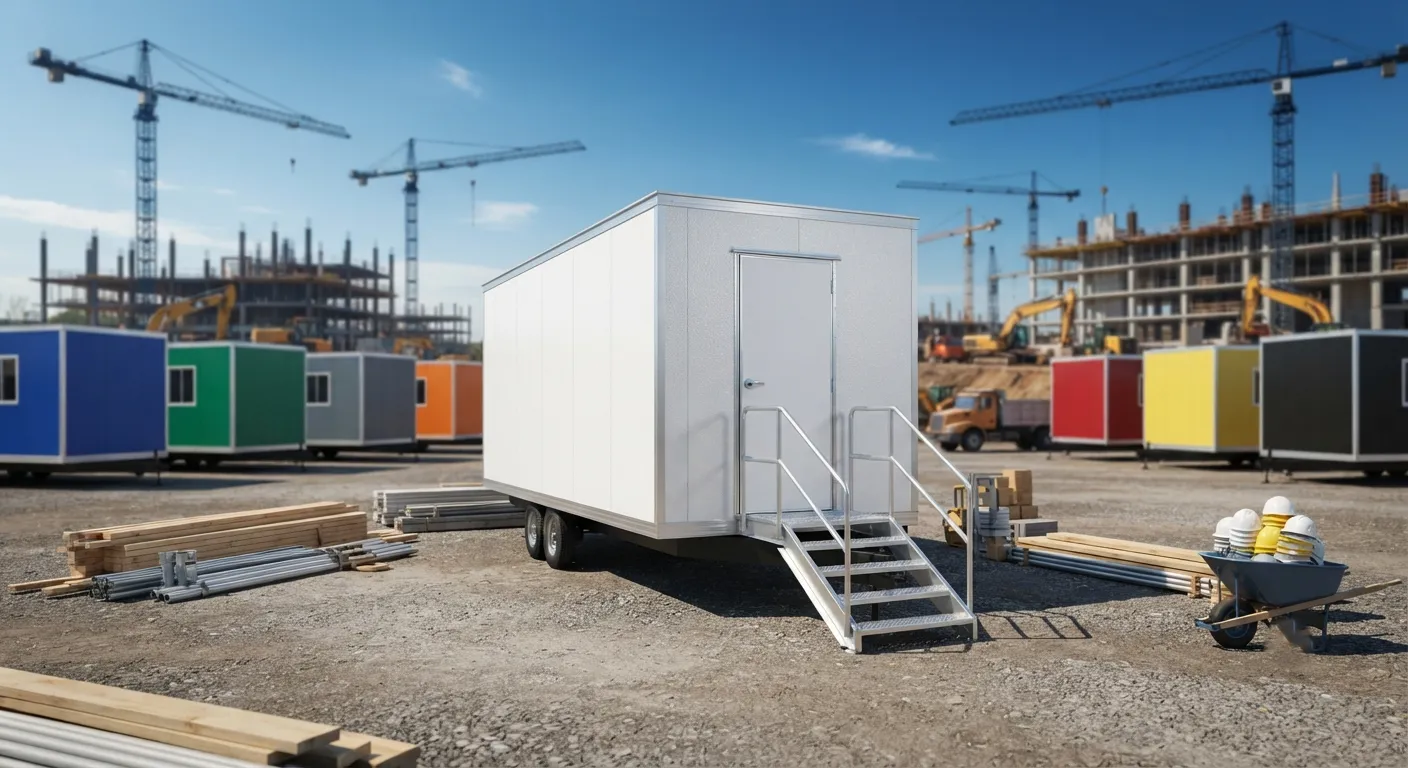
A city permit and an OSHA requirement are two different things, and skipping one does not excuse the other. OSHA 1926.51(c)(1) sets toilet counts for construction sites: one facility for 20 workers or fewer, then one toilet seat and one urinal per 40 workers as the crew grows past that, scaling again at 200 workers. That standard applies whether or not St. Petersburg required paperwork for the unit's location. Crews doing paint, coatings, herbicide or insecticide work also trigger OSHA 1926.51(f)(1), which requires washing facilities for those specific contaminant exposures, not just general dirt. Our OSHA portable toilet requirements page walks through the full ratio table and how it plays out on real sites, and how many porta potties do I need turns those ratios into a simple headcount tool. None of this depends on a municipal permit. It depends on your crew size, full stop.
Why does dumpster permitting come up in the same conversation?
Because the two questions get asked together constantly: do you need a permit for a dumpster, and do you need one for the toilet next to it. The answer follows the same logic in both cases. A roll-off dumpster rental parked on your own lot typically needs nothing from the city. Set that same dumpster at the curb, on a street in a dense area, or anywhere in the right of way, and now you are in permit-for-dumpster-on-street territory, the kind of rule that comes up whether you are working in St. Petersburg or hear about a Jersey City dumpster permit from a crew that worked up north. Site logistics matter here too. OSHA 1926.25 requires debris to be cleared from work areas, and OSHA 1926.252 covers how waste gets disposed of, chutes and enclosures included, so the dumpster's location affects more than curb appeal. If you are unsure which of your rentals, a 10 yard dumpster rental or a full-size unit, needs street clearance, check our dumpster permit requirements page or just ask when you book.

Nearby areas and what stays the same
Permit logic does not change much as you move across the region. Gulfport sits 5.2 miles west of St. Petersburg, Lealman is 6.6 miles northwest, and Pinellas Park is 10.1 miles northwest. Crews working any of those areas, or booking a porta potty rental in St. Pete Beach 9.5 miles southwest, run into the same private-lot-versus-right-of-way distinction. St. Petersburg Porta Pros services all of it, and our service areas page lists the full coverage map alongside Seminole, 12.8 miles northwest.
Do I need a permit for a porta potty on my own property?
Generally no. Private property placement, whether a backyard for a party or a fenced construction lot, does not typically require a city permit in St. Petersburg. Confirm with the city only if the unit will sit near a shared driveway or property line dispute is possible.
Do I need a permit for a dumpster on the street?
Likely yes, and it needs confirming with St. Petersburg before delivery. Right of way placement is treated differently from a private driveway or lot, the same distinction that applies to porta potties parked at the curb.
Does a temporary power pole need a permit too?
It often does, since it ties into utility service and site electrical. Ask about your temporary power pole at the same time you confirm dumpster or restroom placement, since inspections sometimes cover all three together.
How many porta potties does OSHA require for my crew?
OSHA 1926.51(c)(1) sets the baseline: one unit for 20 workers or fewer, then additional fixtures per 40 workers as the count rises. Use our how many porta potties do I need guide to match units to your actual headcount.
What if my site has no clear right of way line?
Call before you schedule delivery. St. Petersburg Porta Pros can flag likely right of way conflicts based on the address, then point you toward confirming exact boundaries with the city so your porta john rental or dumpster lands somewhere it can legally stay.
Next step
Get a delivery date
Tell us the address, the dates and the headcount. We size the order and confirm the route.