
How many porta potties do I need for a construction site?
OSHA 1926.51(c) sets the real floor here: 1 toilet facility for 20 workers or fewer, then 1 toilet seat and 1 urinal per 40 workers once you pass 20, and 1 seat plus 1 urinal per 50 workers at 200 or more. A crew of 15 needs one unit. A crew of 45 needs two toilet seats and two urinals, or the equivalent combined units. Most contractors round up rather than split hairs on the math. If your site also handles paint, coatings or pesticide work, OSHA 1926.51(f)(1) kicks in a separate washing requirement for that contaminant exposure, distinct from the toilet count itself. Pair the units with a handwashing station rental to stay ahead of both rules at once. Worked example: a 35-person framing crew in St. Petersburg working 40 hours a week needs at least one toilet seat and one urinal under the 20-40 bracket, so most crews order two standard units to keep lines short. Check construction site services for a full jobsite package, and see OSHA portable toilet requirements for the bracket table in full.
How many porta potties do I need for an event?
Events run on guest count and hours, not worker shifts, so the math looks different. A 4-hour event with no alcohol runs about one unit per 50 guests. Add alcohol and that ratio tightens, because drinking increases both frequency and urgency. A wedding of 150 guests over 5 hours with a full bar should plan for one unit per 35 to 40 guests rather than 50. Multi-day festivals need service scheduled between days, not just at the end, and you should factor in at least one ADA accessible porta potty per cluster under ADA Standards section 213.2, which requires 5 percent of clustered units to be accessible with never fewer than one. Worked example: a 300-person festival in St. Petersburg running two days with beer service should plan for 8 to 10 standard units plus one ADA unit, split across two clusters for crowd flow. Browse event restroom rental or check specifics on wedding restroom rental and festival restroom rental pricing.
| event type | guests | hours | units needed |
|---|---|---|---|
| no alcohol | 100 | 4 | 2 |
| no alcohol | 250 | 4 | 5 |
| with alcohol | 100 | 5 | 3 |
| with alcohol | 250 | 6 | 7 |
What does OSHA require for jobsite toilets?
OSHA 1926.51(c) is the construction standard, and it is bracket-based, not a flat per-worker number. Under 20 workers gets one facility. From 20 to 199 workers, add one toilet seat and one urinal per 40 people. At 200 or more, it drops to one seat and one urinal per 50. Note this differs from general industry rules under OSHA 1910.141(c)(1)(i), which apply to fixed workplaces, not job sites. Farms and agricultural operations fall under a separate standard, OSHA 1928.110, which requires one facility per 20 hand-labor employees within a quarter mile walk, plus potable water. If your crew mixes trades and roles, size to the largest headcount on-site during peak hours, not the average across the week. A standard porta potty rental satisfies the base requirement, while a deluxe flushable porta potty adds comfort for longer jobs. For farm work near St. Petersburg, see farm and agricultural restrooms for the quarter-mile placement detail.
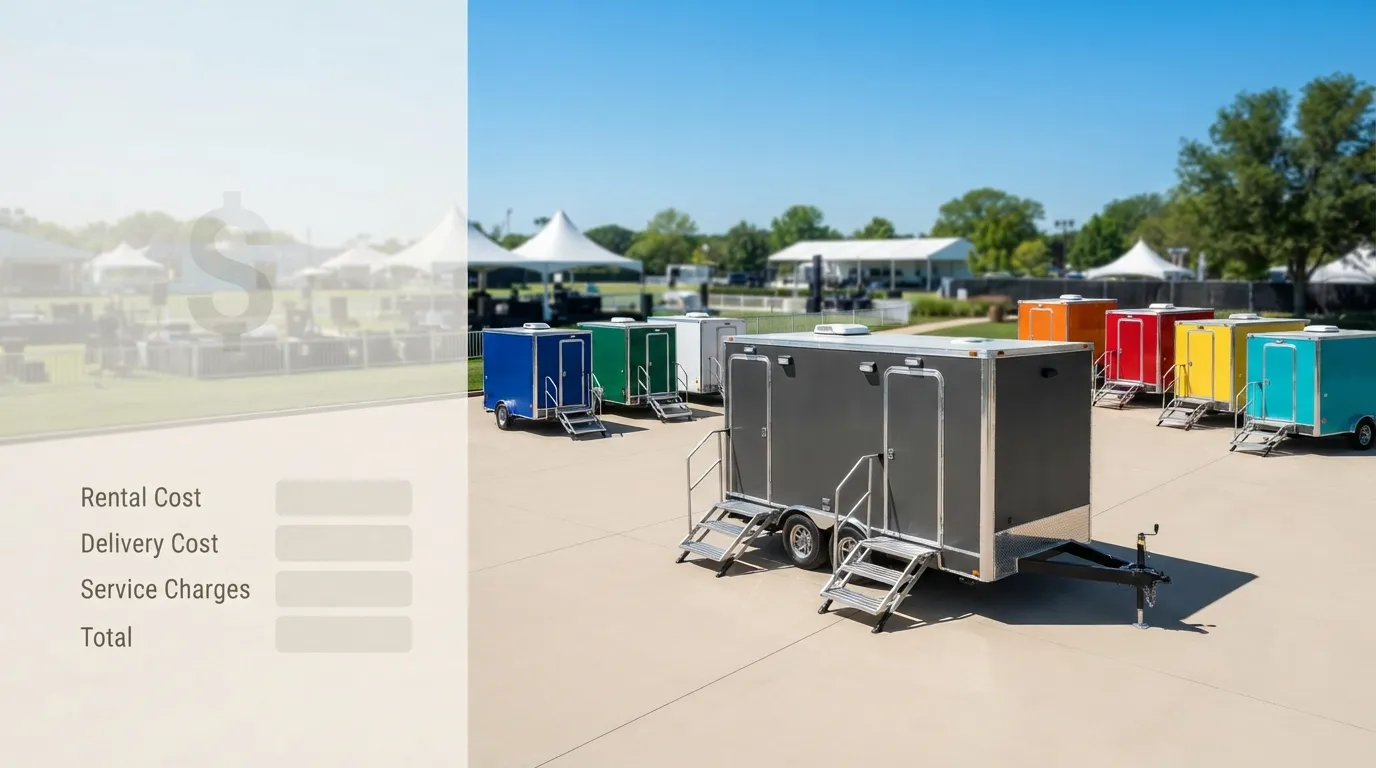
How many tons does a 30 yard dumpster hold?
So how many tons can a 30 yard dumpster hold? A 30 yard dumpster typically holds 4 to 6 tons of mixed construction debris, though the exact weight depends on material density. A 30 yard box measures roughly 22 feet long, and heavier loads like concrete or shingles fill the weight limit long before they fill the volume. So how many tons does a 40 yard dumpster hold? A 40 yard dumpster holds slightly more, generally 5 to 7 tons, and runs closer to 22 feet long as well but with taller walls for lighter, bulkier waste like framing scrap. How many feet is a 20 yard dumpster? It spans about 16 feet and holds 2 to 3 tons. How many feet is a 10 yard dumpster? It runs about 12 feet long and holds 1 to 2 tons. How many cubic feet in a 10 yard dumpster? It holds around 1,296 cubic feet. How many cubic feet in a 20 yard dumpster? It holds about 2,592 cubic feet, and a 40 yard holds close to 5,184 cubic feet. See dumpster sizes and dimensions for the full breakdown, and check dumpster weight limits before you load anything dense. A roll-off delivery needs about 60 feet of straight clearance behind the truck, so confirm your driveway or lot layout before scheduling.
| dumpster size | length | cubic feet | typical weight capacity |
|---|---|---|---|
| 10 yard | 12 feet | 1,296 | 1-2 tons |
| 20 yard | 16 feet | 2,592 | 2-3 tons |
| 30 yard | 22 feet | 3,888 | 4-6 tons |
| 40 yard | 22 feet | 5,184 | 5-7 tons |
For pricing on any size, start with roll-off dumpster rental or jump straight to dumpster rental cost for the full range.
Do I need an ADA unit for my event or jobsite?
Yes, if you have clustered units, ADA Standards section 213.2 requires at least 5 percent to be accessible, with a minimum of one no matter how small the cluster. That single ADA unit needs a 60 inch turning circle per ADA Standards section 304.3.1, a 32 inch clear door opening under section 404.2.3, and a stable, slip-resistant surface underneath per section 302.1. Most jobsites and events in St. Petersburg order one ADA unit per restroom bank rather than calculating the percentage each time, since it is simpler and usually satisfies the minimum anyway. Larger sites with multiple clusters spread across a property need to check each cluster separately. Full detail lives on ADA restroom requirements and ADA accessible porta potty.
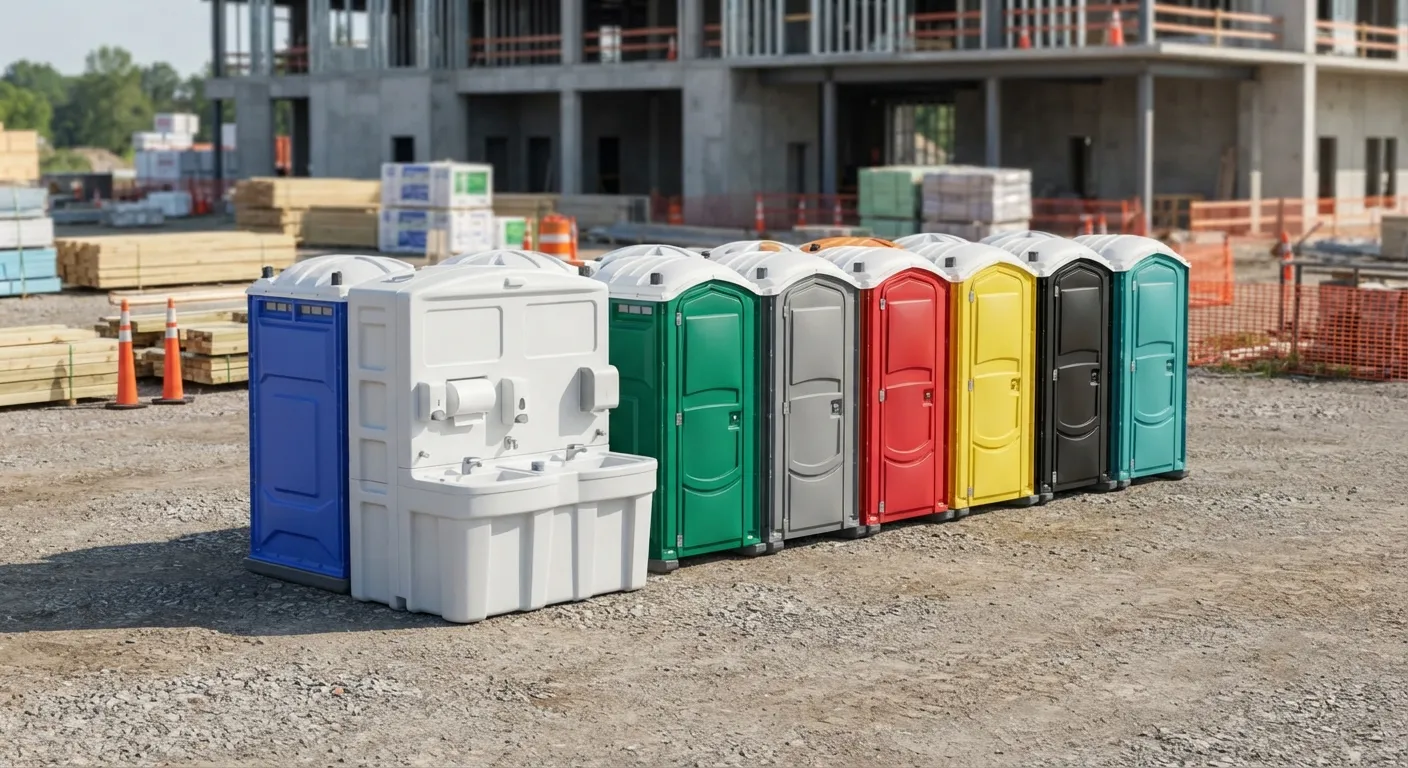
How does alcohol change my restroom count?
Alcohol increases both bathroom frequency and duration per visit, which is why the standard 1-per-50 event ratio tightens once a bar or open beer service is involved. A 4-hour event with alcohol should shift closer to 1 unit per 35 guests, and a 6-hour event with heavy drinking can push toward 1 per 30. This matters most for weddings, concerts and festivals where the bar stays open the entire event rather than a single toast. Multi-day events compound the issue further, since tanks fill faster with alcohol-driven usage and need mid-event servicing rather than end-of-event pickup only. A deluxe flushable porta potty with a larger holding tank buys extra time between services. Check concert restroom rental or golf tournament restrooms for use cases where alcohol service is standard, and marathon and race restrooms where water and hydration stations shift the ratio the other direction.
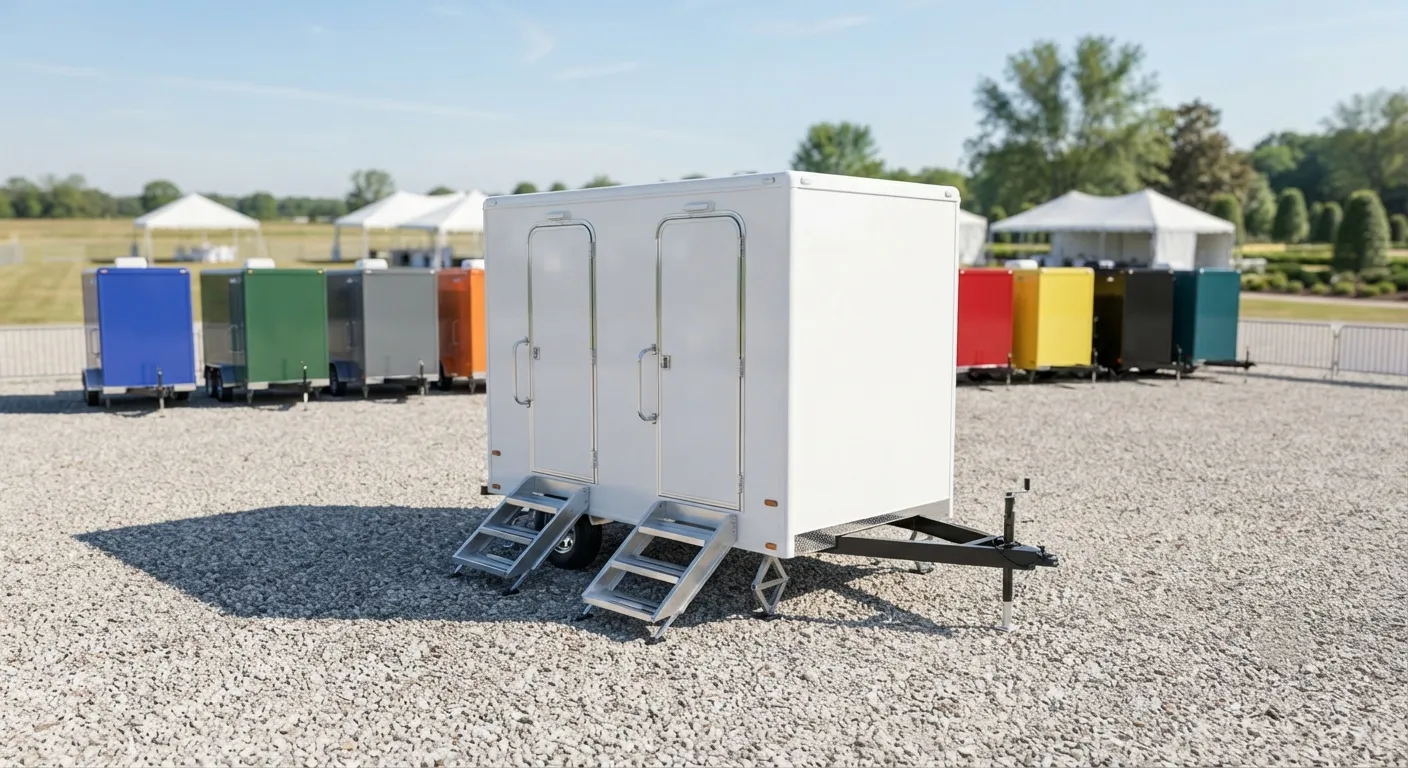
When should I order extra units for a multi-day event or job?
Order extra capacity whenever your event or job runs more than one day, since tanks that would last a single afternoon fill up fast across 48 or 72 hours of continuous use. A standard unit carries a 60 to 70 gallon holding tank, and a busy multi-day festival can push that limit well before scheduled service arrives. Adding 15 to 20 percent more units than the single-day math suggests is a reasonable buffer, and scheduling a mid-event pump-out keeps things from backing up on day two or three. Jobsites running multi-week projects should also plan around weekly servicing rather than relying on a single delivery to last the whole job. St. Petersburg's warmer months add another wrinkle, since heat accelerates tank fill perception and odor buildup, so more frequent service intervals help. See porta potty rental checklist for a full planning list, and emergency porta potty rental if you underestimate and need same-day backup delivery in St. Petersburg or nearby in Gulfport, 5.2 miles west.
How many porta potties do I need for 100 guests?
For a 4-hour event without alcohol, plan on two standard units for 100 guests. Add alcohol service and that climbs to three, since drinking increases bathroom frequency. Longer events past 5 hours should add one more unit regardless of alcohol. Always add one ADA unit per cluster.
How many porta potties does OSHA require for a 50-person crew?
Under OSHA 1926.51(c), a 50-person crew falls in the 20-199 worker bracket, requiring one toilet seat and one urinal per 40 workers. That means two toilet seats and two urinals, since 50 exceeds the 40-worker threshold for a single fixture set.
How many tons does a 20 yard dumpster hold?
A 20 yard dumpster typically holds 2 to 3 tons, depending on material density. Concrete and roofing shingles hit the weight limit fast, while lighter household debris fills the 2,592 cubic feet of volume before weight becomes a concern.
How many cubic feet are in a 40 yard dumpster?
A 40 yard dumpster holds approximately 5,184 cubic feet. It is one of the largest roll-off sizes available and works well for large construction cleanouts or whole-home renovation debris where volume matters more than density.
Does a bigger dumpster always cost more?
Not always in a simple day-rate sense, but generally yes across duration. Rental cost depends on size, weight allowance and rental length together, so check dumpster rental cost for the full comparison across sizes and durations before assuming bigger always means pricier.
How far will St. Petersburg Porta Pros deliver?
Delivery covers St. Petersburg and nearby communities including Gulfport at 5.2 miles west, Lealman at 6.6 miles northwest, and St. Pete Beach at 9.5 miles southwest. Check service areas for the full list or request a quote with your address.
Next step
Get a delivery date
Tell us the address, the dates and the headcount. We size the order and confirm the route.